2. Psychological Safety as a Mechanism for Voice, Learning, and Performance
Psychological safety, commonly defined as a shared belief that the workplace is fully supportive of interpersonal risk-taking, is central to organizational scholarship because it enables employees to express varying uncertainty, acknowledge errors, seek guidance, and offer heretical views without fear of embarrassment or retaliation
| [13] | Edmondson, A.C. (1999). Psychological safety and learning behavior in work teams. Administrative Science Quarterly, 44(2), 350-383.
https://doi.org/10.2307/2666999 |
[13]
. Evidence synthesized in systematic literature reviews indicates that psychological safety is strongly associated with people’s learning behaviors, information sharing, proactive communication, and improved performance outcomes across varying organizational contexts
| [16] | Frazier, M. L., Fainshmidt, S., Klinger, R. L., Pezeshkan, A., & Vracheva, V. (2017). Psychological safety: A meta‐analytic review and extension. Personnel Psychology, 70(1), 113–165. http://dx.doi.org/10.1111/peps.12183 |
| [36] | Newman, A., Donohue, R., & Eva, N. (2017). Psychological safety: A systematic review of the literature. Human Resource Management Review, 27(3), 521–535.
https://doi.org/10.1016/j.hrmr.2017.01.001 |
[16, 36]
. This line of work is particularly significant in understanding employee voice: when employees perceive higher psychologically safe workspaces, they are more likely to raise concerns, point out errors, and challenge prevailing assumptions because the interpersonal and career risks typically associated with speaking up are weakened
| [11] | Detert, J. R., & Burns, J. R. (2007). Leadership behavior and employee voice: Is the door really open? Journal of Leadership & Organizational Studies, 14(2), 126–141.
https://doi.org/10.5465/amj.2007.26279183 |
| [59] | Xu, M., Qin, X., Dust, S. B., & DiRenzo, M. S. (2019). Supervisor-subordinate proactive personality congruence and psychological safety: A signaling theory approach to employee voice behavior. The Leadership Quarterly, 30(4), 440–453. https://doi.org/10.1016/j.leaqua.2019.03.001 |
[11, 59]
.
Safety science highlights psychological safety as a vital link between broader safety climate, leadership, and safety behaviors such as voice, participation, and compliance. This connection carries significant implications for promoting worker well-being and preventing accidents
| [32] | Maritsa, E., Goula, A., Psychogios, A., & Pierrakos, G. (2022). Leadership development: Exploring relational leadership implications in healthcare organizations. International Journal of Environmental Research and Public Health, 19(23), 15971. https://doi.org/10.3390/ijerph192315971 |
| [7] | Cherak, M. (2024). Effect of leadership style on organizational commitment in Algeria. American Journal of Leadership and Governance, 9(2), 64–76. https://doi.org/10.47672/ajlg.2147 |
| [42] | Peker, M., Doğru, O. C., & Meşe, G. (2022). Role of supervisor behavioral integrity for safety in the relationship between top-management safety climate, safety motivation, and safety performance. Safety and Health at Work, 13(2), 192–200.
https://doi.org/10.1016/j.shaw.2022.03.006 |
| [45] | Quansah, P. E., Zhu, Y., & Guo, M. (2023). Assessing the effects of safety leadership, employee engagement, and psychological safety on safety performance. Journal of Safety Research, 87, 156–168. https://doi.org/10.1016/j.jsr.2023.07.002 |
| [53] | Sun, Y., Yang, H., Wu, X., Jiang, Y., & Qian, C. (2022). How safety climate impacts safety voice—Investigating the mediating role of psychological safety from a social cognitive perspective. International Journal of Environmental Research and Public Health, 19(19), 11867.
https://doi.org/10.3390/ijerph191911867 |
[32, 7, 42, 45, 53]
. It is situated within a larger psychosocial safety climate that represents organizational efforts to safeguard mental health and foster support. Recent reviews indicate that this climate influences motivation, engagement, and safety-related actions through psychological safety, an essential interpersonal element
| [1] | Amoadu, M., Ansah, E. W., & Sarfo, J. O. (2023). Influence of psychosocial safety climate on occupational health and safety: A scoping review. BMC Public Health, 23, Article 1344.
https://doi.org/10.1186/s12889-023-16246-x |
| [10] | Deng, X., Zhang, X., Chen, Y., & Liu, Y. (2024). Social support, psychological capital, multidimensional job burnout, and turnover intention among primary medical staff: A conservation of resources theory perspective. Human Resources for Health, 22, Article 915.
https://doi.org/10.1186/s12960-024-00915-y |
| [19] | Hansbrough, T. K., Lord, R. G., & Schyns, B. (2015). Reconsidering the accuracy of follower leadership ratings. The Leadership Quarterly, 26(2), 220–237.
https://doi.org/10.1016/j.leaqua.2014.10.006 |
| [23] | Hu, Q., Dollard, M. F., & Taris, T. W. (2021). Organizational context matters: Psychosocial safety climate as a precursor to team and individual motivational functioning. Safety Science, 145, 105524. https://doi.org/10.1016/j.ssci.2021.105524 |
| [56] | Weigl, M., Weber, F., Hornung, S., Angerer, P., & Müller, A. (2022). Congruence rules! Increased self-efficacy after occupational health and safety intervention. Scandinavian Journal of Work and Organizational Psychology, 7(1), Article 8.
https://doi.org/10.16993/sjwop.153 |
[1, 10, 19, 23, 56]
.
Importantly, psychological safety is widely considered an individual perception; it varies across teams and contexts depending on workplace climate strength and stability
| [17] | Fyhn, B., Bang, H., Egeland, T. E., & Schei, V. (2023). Safe among the unsafe: Psychological safety climate strength matters for team performance. Small Group Research, 54(4), 439–473. https://doi.org/10.1177/10464964221121273 |
| [26] | Koopmann, J., Lanaj, K., Wang, M., Zhou, L., & Shi, J. (2016). Nonlinear effects of team tenure on team psychological safety climate and climate strength: Implications for average team member performance. Journal of Applied Psychology, 101(7), 940–957. https://doi.org/10.1037/apl0000097 |
[17, 26]
. Its importance extends to healthcare, where it relates to patient safety and error reporting, both crucial for performance and harm reduction
| [25] | Kim, M., & Yi, Y. (2019). Impact of leader-member-exchange and team member-exchange on nurses’ job satisfaction and turnover intention. International Nursing Review, 66, 242-249. https://doi.org/10.1111/inr.12491 |
| [35] | Montgomery, A., Panagopoulou, E., Benos, A., & Smith, J. (2025). Psychological safety and patient safety: A systematic and narrative review. Safety Science, 176, 105987.
https://doi.org/10.1016/j.ssci.2024.105987 |
| [43] | Piao, J., & Hahn, J. (2025). How safety leadership influences employee safety participation and compliance through safety knowledge: The moderating role of psychological resilience. Frontiers in Psychology, 16, 1615084.
https://doi.org/10.3389/fpsyg.2025.1615084 |
| [48] | Saygili, M., Hikmet, N., & Yorgancioglu Tarcan, G. (2025). The effect of leader–member exchange on turnover intention in healthcare employees. Journal of Health Organization and Management, 39(7), 1364–1382.
https://doi.org/10.1108/JHOM-09-2024-0394 |
[25, 35, 43, 48]
Overall, psychological safety is a relational mechanism through which organizational climates and leadership shape voice, learning, and performance, and it is context-dependent and impactful in both general and safety-critical environments.
2.1. Hierarchy and Positional Advantage: Why Supervisors May Feel Safer
Organizational hierarchy shapes psychological safety by changing risks and consequences of speaking up, often giving supervisors clear advantages that lower their interpersonal vulnerability. Psychologically safe workspaces rely on whether employees feel they can raise concerns or admit mistakes without facing negative consequences
| [13] | Edmondson, A.C. (1999). Psychological safety and learning behavior in work teams. Administrative Science Quarterly, 44(2), 350-383.
https://doi.org/10.2307/2666999 |
| [40] | Owens, B. P., Johnson, M. D., & Mitchell, T. R. (2013). Expressed humility in organizations: Implications for performance, teams, and leadership. Organization Science, 24(5), 1517–1538. https://doi.org/10.1287/orsc.1120.0795 |
[13, 40]
. This approach is relevant because supervisors have more discretion, influence, and access to information, which boosts their confidence that their contributions will be valued. As such, these resources help reduce fears about speaking up and explain why supervisors typically report higher psychological safety than non-supervisors.
Research shows that employees weigh the interpersonal and career costs of voicing concerns, which tend to be higher for those with less power or protection
| [11] | Detert, J. R., & Burns, J. R. (2007). Leadership behavior and employee voice: Is the door really open? Journal of Leadership & Organizational Studies, 14(2), 126–141.
https://doi.org/10.5465/amj.2007.26279183 |
| [51] | Shortland, N. D., McCusker, M. E., Alison, L., Blacksmith, N., Crayne, M. P., Thompson, L., Gonzales, J., McGarry, P., & Stevens, C. (2023). Avoidant authority: The effect of organizational power on decision-making in high-uncertainty situations. Frontiers in Psychology, 13, Article 1027108.
https://doi.org/10.3389/fpsyg.2022.1027108 |
| [59] | Xu, M., Qin, X., Dust, S. B., & DiRenzo, M. S. (2019). Supervisor-subordinate proactive personality congruence and psychological safety: A signaling theory approach to employee voice behavior. The Leadership Quarterly, 30(4), 440–453. https://doi.org/10.1016/j.leaqua.2019.03.001 |
[11, 51, 59]
. Supervisors are less vulnerable to retaliation because of their authority and networks. Hierarchy also creates unique, informational, and psychological distance between leaders and followers, resulting in different perceptions of workplace conditions
| [29] | Lee, J. J., & Carpenter, N. C. (2018). Seeing eye to eye: A meta-analysis of self–other agreement of leadership. The Leadership Quarterly, 29(2), 253–275.
https://doi.org/10.1016/j.leaqua.2017.06.002 |
| [37] | Nielsen, K., Tafvelin, S., von Thiele Schwarz, U., & Hasson, H. (2022). In the eye of the beholder: How self-other agreements influence leadership training outcomes as perceived by leaders and their followers. Journal of Business and Psychology, 37, 73–90. https://doi.org/10.1007/s10869-020-09730-3 |
| [61] | Zhang, Y., Li, J., Deng, Y., & Zheng, Y. (2022). Avoid or approach: How CEO power affects corporate environmental innovation. Journal of Innovation & Knowledge, 7(4), 100250. https://doi.org/10.1016/j.jik.2022.100250 |
[29, 37, 61]
. These perceptual differences matter. Supervisors' positional privilege may shield them from day-to-day frictions, informal sanctions, and relational risks employees face when offering upward feedback, voicing disagreement, or challenging ideas. Leadership dynamics reinforce these gaps. Even well-intended leaders sometimes react defensively to employee feedback or see discourse as a threat to their competence. This discourages employees from speaking out and undermines psychological safety, while supervisors remain unaware that the workplace feels unsafe to those below them
| [15] | Fast, N. J., Burris, E. R., & Bartel, C. A. (2014). Managing to stay in the dark: Managerial self-efficacy, ego defensiveness, and employee voice. Academy of Management Journal, 57(4), 1013–1034. https://doi.org/10.5465/amj.2012.0398 |
[15]
.
Social exchange theories suggest that leader–member relationship quality affects employee openness, but the benefits and protections these relationships provide are often uneven. Supervisory status often grants better access to support, information, and discretion, making risk-taking feel safer
| [1] | Amoadu, M., Ansah, E. W., & Sarfo, J. O. (2023). Influence of psychosocial safety climate on occupational health and safety: A scoping review. BMC Public Health, 23, Article 1344.
https://doi.org/10.1186/s12889-023-16246-x |
| [2] | Ananda, M. A. S., Nurhayati, M., & Rahim, A. R. (2024). The effect of leader member exchange, organizational citizenship behavior, and job crafting on in role performance by employee engagement. International Journal of Applied Management and Business, 2(1). https://doi.org/10.54099/ijamb.v2i1.780 |
| [4] | Bennouna, A., Boughaba, A., Djabou, S., & Mouda, M. (2025). Enhancing workplace wellbeing: Unveiling the dynamics of leader–member exchange and worker safety behavior through psychological safety and job satisfaction. Safety and Health at Work, 16(1), 36–45.
https://doi.org/10.1016/j.shaw.2024.11.003 |
| [6] | Breevaart, K., Bakker, A. B., Demerouti, E., & Van den Heuvel, M. (2015). Leader-member exchange, work engagement, and job performance. Journal of Managerial Psychology, 30, 754–770. https://doi.org/10.1108/JMP-03-2013-0088 |
[1, 2, 4, 6]
. Overall, research testifies that supervisors' higher psychological safety is less about personal traits and more about their hierarchical position—an advantage that comes from decision-making authority, informational control, and lower vulnerability to negative social or career consequences. Importantly, closing the psychological safety gap involves more than encouraging supervisors to be supportive or training employees to speak up. It requires organizational structures that foster transparency, strengthen upward communication, and reduce the risks employees face when raising relevant workplace concerns
| [12] | Dong, R. K., Li, X., & Hernan, R. R. (2024). Psychological safety and psychosocial safety climate in workplace: A bibliometric analysis and systematic review towards a research agenda. Journal of Safety Research, 91, 1–19.
https://doi.org/10.1016/j.jsr.2024.08.001 |
| [53] | Sun, Y., Yang, H., Wu, X., Jiang, Y., & Qian, C. (2022). How safety climate impacts safety voice—Investigating the mediating role of psychological safety from a social cognitive perspective. International Journal of Environmental Research and Public Health, 19(19), 11867.
https://doi.org/10.3390/ijerph191911867 |
| [57] | Willie, M. M. (2025). High-quality leader-member exchange relationships: A pathway to organizational success. Golden Ratio of Data in Summary, 5(2).
https://doi.org/10.52970/grdis.v5i2.730 |
[12, 53, 57]
.
2.1.1. Compositional Explanations: Demographics, Socioeconomic Resources, and Selection into Supervision
While higher psychological safety among supervisors can partly be attributed to their hierarchical position, another perspective suggests that the supervisor–employee gap comes from compositional differences, such as demographic and socioeconomic variations. Supervisors are not randomly selected. Promotion to leadership roles depends on varying organizational systems and labor-market stratification that favor education, experience, and socioeconomic status. These patterns are relevant because psychologically safe workspaces depend on perceptions of vulnerability, role legitimacy, and resource access, which help buffer interpersonal and career risks
| [13] | Edmondson, A.C. (1999). Psychological safety and learning behavior in work teams. Administrative Science Quarterly, 44(2), 350-383.
https://doi.org/10.2307/2666999 |
| [36] | Newman, A., Donohue, R., & Eva, N. (2017). Psychological safety: A systematic review of the literature. Human Resource Management Review, 27(3), 521–535.
https://doi.org/10.1016/j.hrmr.2017.01.001 |
[13, 36]
. Employees with greater socioeconomic resources, such as higher income, may feel more control over their circumstances, making speaking up feel less risky and more viable. Employee voice decisions are based on cost–benefit analyses cultivated by risks of retaliation and likelihood of positive outcomes, signaling that these calculations are affected by status and resources
| [11] | Detert, J. R., & Burns, J. R. (2007). Leadership behavior and employee voice: Is the door really open? Journal of Leadership & Organizational Studies, 14(2), 126–141.
https://doi.org/10.5465/amj.2007.26279183 |
| [59] | Xu, M., Qin, X., Dust, S. B., & DiRenzo, M. S. (2019). Supervisor-subordinate proactive personality congruence and psychological safety: A signaling theory approach to employee voice behavior. The Leadership Quarterly, 30(4), 440–453. https://doi.org/10.1016/j.leaqua.2019.03.001 |
[11, 59]
.
Education and age bolster credibility, confidence, and risk tolerance, increasing perceptions of safety independently of formal supervisor status
| [16] | Frazier, M. L., Fainshmidt, S., Klinger, R. L., Pezeshkan, A., & Vracheva, V. (2017). Psychological safety: A meta‐analytic review and extension. Personnel Psychology, 70(1), 113–165. http://dx.doi.org/10.1111/peps.12183 |
| [17] | Fyhn, B., Bang, H., Egeland, T. E., & Schei, V. (2023). Safe among the unsafe: Psychological safety climate strength matters for team performance. Small Group Research, 54(4), 439–473. https://doi.org/10.1177/10464964221121273 |
[16, 17]
. Demographics like sex and race matter primarily because bias, unequal treatment, and credibility issues can heighten the risks for marginalized groups, lowering their sense of safety even when communication norms appear open
| [29] | Lee, J. J., & Carpenter, N. C. (2018). Seeing eye to eye: A meta-analysis of self–other agreement of leadership. The Leadership Quarterly, 29(2), 253–275.
https://doi.org/10.1016/j.leaqua.2017.06.002 |
| [37] | Nielsen, K., Tafvelin, S., von Thiele Schwarz, U., & Hasson, H. (2022). In the eye of the beholder: How self-other agreements influence leadership training outcomes as perceived by leaders and their followers. Journal of Business and Psychology, 37, 73–90. https://doi.org/10.1007/s10869-020-09730-3 |
[29, 37]
. Social exchange theory suggests that supportive supervisor–employee relationships foster openness, but unevenness in relationships among demographic groups could explain disparities in psychological safety
| [1] | Amoadu, M., Ansah, E. W., & Sarfo, J. O. (2023). Influence of psychosocial safety climate on occupational health and safety: A scoping review. BMC Public Health, 23, Article 1344.
https://doi.org/10.1186/s12889-023-16246-x |
| [4] | Bennouna, A., Boughaba, A., Djabou, S., & Mouda, M. (2025). Enhancing workplace wellbeing: Unveiling the dynamics of leader–member exchange and worker safety behavior through psychological safety and job satisfaction. Safety and Health at Work, 16(1), 36–45.
https://doi.org/10.1016/j.shaw.2024.11.003 |
| [6] | Breevaart, K., Bakker, A. B., Demerouti, E., & Van den Heuvel, M. (2015). Leader-member exchange, work engagement, and job performance. Journal of Managerial Psychology, 30, 754–770. https://doi.org/10.1108/JMP-03-2013-0088 |
[1, 4, 6]
.
In safety-critical environments, these effects are especially important because speaking up often involves reporting hazards or unsafe practices. Safety climate influences whether workers feel safe to raise concerns, but these effects may vary by occupation and demographic groups since lower-status roles emphasize difference and carry higher costs for voicing concerns
| [1] | Amoadu, M., Ansah, E. W., & Sarfo, J. O. (2023). Influence of psychosocial safety climate on occupational health and safety: A scoping review. BMC Public Health, 23, Article 1344.
https://doi.org/10.1186/s12889-023-16246-x |
| [23] | Hu, Q., Dollard, M. F., & Taris, T. W. (2021). Organizational context matters: Psychosocial safety climate as a precursor to team and individual motivational functioning. Safety Science, 145, 105524. https://doi.org/10.1016/j.ssci.2021.105524 |
| [53] | Sun, Y., Yang, H., Wu, X., Jiang, Y., & Qian, C. (2022). How safety climate impacts safety voice—Investigating the mediating role of psychological safety from a social cognitive perspective. International Journal of Environmental Research and Public Health, 19(19), 11867.
https://doi.org/10.3390/ijerph191911867 |
[1, 23, 53]
. Research indicates that psychosocial safety climate influences motivation and safety behavior through employee perceptions of support
| [12] | Dong, R. K., Li, X., & Hernan, R. R. (2024). Psychological safety and psychosocial safety climate in workplace: A bibliometric analysis and systematic review towards a research agenda. Journal of Safety Research, 91, 1–19.
https://doi.org/10.1016/j.jsr.2024.08.001 |
| [38] | Omidi, L., Karimi, H., Pilbeam, C., Mousavi, S., & Moradi, G. (2023). Exploring the relationships among safety leadership, safety climate, psychological contract of safety, risk perception, safety compliance, and safety outcomes. Frontiers in Public Health, 11, 1235214.
https://doi.org/10.3389/fpubh.2023.1235214 |
| [45] | Quansah, P. E., Zhu, Y., & Guo, M. (2023). Assessing the effects of safety leadership, employee engagement, and psychological safety on safety performance. Journal of Safety Research, 87, 156–168. https://doi.org/10.1016/j.jsr.2023.07.002 |
[12, 38, 45]
. Overall, if supervisors differ systematically from non-supervisors in income, education, age, and demographics, safety gaps may reflect who becomes a supervisor rather than the actual role itself. This matters for intervention strategies: compositional explanations suggest improving equitable access to advancement, while positional ones point toward redesigning unique structures and employee voice systems to reduce rank reliance.
Since these explanations are often confounded in observational research, this case study tests the compositional account that controls for demographic factors and using Blinder–Oaxaca decomposition to estimate how much of the safety gap comes from observable characteristics versus unique role-based factors
| [5] | Blinder, A.S. (1973). Wage discrimination: reduced form and structural estimates. Journal of Human Resources, 8(4), 436-455. https://doi.org/10.2307/144855 |
| [41] | Oaxaca, R. (1973). Male-female wage differentials in urban labor markets. International Economic Review, 14(3), 693-709. |
[5, 41]
. The decomposition shows that demographic and socioeconomic factors account for only a small portion of the supervisor–employee psychological safety gap, highlighting the relevance of role-related dynamics in explaining the remaining difference.
2.1.2. Testing the Compositional Explanation: Blinder–Oaxaca Decomposition
A central issue in psychological safety research is not just confirming varying perceptions across organizational roles but also understanding why these differences exist and persist. Researchers have recognized that social context and role-based power influence psychological safety, which can differ within the same organization based on individuals' status, opportunities to voice concerns, and exposure to interpersonal risks
| [11] | Detert, J. R., & Burns, J. R. (2007). Leadership behavior and employee voice: Is the door really open? Journal of Leadership & Organizational Studies, 14(2), 126–141.
https://doi.org/10.5465/amj.2007.26279183 |
| [30] | Li, P., Yin, K., Shi, J., Damen, T. G. E., & Taris, T. W. (2020). The impact of paradoxical leadership on employee voice behavior: A moderated mediation model. Journal of Business Ethics, 164(4), 733–749.
https://doi.org/10.1007/s10551-018-4093-0 |
[11, 30]
. Studies also show that supervisors and employees often have contrasting views about workplace conditions, relational environments, and leadership processes. These differences stem from informational gaps, status-based filtering, and varying vulnerability to negative outcomes
| [29] | Lee, J. J., & Carpenter, N. C. (2018). Seeing eye to eye: A meta-analysis of self–other agreement of leadership. The Leadership Quarterly, 29(2), 253–275.
https://doi.org/10.1016/j.leaqua.2017.06.002 |
| [37] | Nielsen, K., Tafvelin, S., von Thiele Schwarz, U., & Hasson, H. (2022). In the eye of the beholder: How self-other agreements influence leadership training outcomes as perceived by leaders and their followers. Journal of Business and Psychology, 37, 73–90. https://doi.org/10.1007/s10869-020-09730-3 |
[29, 37]
.
Thus, supervisor-employee gap perceptions matter both theoretically and practically. Supervisors' higher safety perceptions may reflect genuine role advantages but could also lead supervisors to overestimate how safe it is for employees to speak openly, misinterpret silence as agreement, underestimate voice barriers, and, more importantly, assume that formal openness systems work when they aren’t
| [11] | Detert, J. R., & Burns, J. R. (2007). Leadership behavior and employee voice: Is the door really open? Journal of Leadership & Organizational Studies, 14(2), 126–141.
https://doi.org/10.5465/amj.2007.26279183 |
| [59] | Xu, M., Qin, X., Dust, S. B., & DiRenzo, M. S. (2019). Supervisor-subordinate proactive personality congruence and psychological safety: A signaling theory approach to employee voice behavior. The Leadership Quarterly, 30(4), 440–453. https://doi.org/10.1016/j.leaqua.2019.03.001 |
[11, 59]
.
Yet, simply identifying a perception gap doesn’t reveal its roots. This is complicated by the fact that demographic and socioeconomic factors influence who becomes a supervisor, meaning observed gaps may result from both positional and compositional factors
| [16] | Frazier, M. L., Fainshmidt, S., Klinger, R. L., Pezeshkan, A., & Vracheva, V. (2017). Psychological safety: A meta‐analytic review and extension. Personnel Psychology, 70(1), 113–165. http://dx.doi.org/10.1111/peps.12183 |
| [17] | Fyhn, B., Bang, H., Egeland, T. E., & Schei, V. (2023). Safe among the unsafe: Psychological safety climate strength matters for team performance. Small Group Research, 54(4), 439–473. https://doi.org/10.1177/10464964221121273 |
[16, 17]
. Therefore, robust methods are necessary to disentangle the effects of observable characteristics from structural and unobserved role-related factors. Most current research uses regression analysis to test whether supervisory status predicts psychological safety while controlling for variables such as age, education, and income. Hierarchical regression helps determine whether supervisory status explains additional variance in safety perceptions beyond demographic and occupational factors and is a common approach in relevant organizational studies
| [17] | Fyhn, B., Bang, H., Egeland, T. E., & Schei, V. (2023). Safe among the unsafe: Psychological safety climate strength matters for team performance. Small Group Research, 54(4), 439–473. https://doi.org/10.1177/10464964221121273 |
| [36] | Newman, A., Donohue, R., & Eva, N. (2017). Psychological safety: A systematic review of the literature. Human Resource Management Review, 27(3), 521–535.
https://doi.org/10.1016/j.hrmr.2017.01.001 |
[17, 36]
. However, regression models cannot clarify how much of the supervisor–employee difference comes from demographics versus role-based advantages. Even when supervisory status remains statistically significant after adjusting for other factors, regression does not decompose gaps into explained and unexplained components. It can also obscure meaningful group differences by focusing on conditional associations rather than disparity sources.
To address this, the case study combines regression controls with the Blinder–Oaxaca decomposition, an analytical framework originally developed to explain group disparities in varying labor markets
| [5] | Blinder, A.S. (1973). Wage discrimination: reduced form and structural estimates. Journal of Human Resources, 8(4), 436-455. https://doi.org/10.2307/144855 |
| [41] | Oaxaca, R. (1973). Male-female wage differentials in urban labor markets. International Economic Review, 14(3), 693-709. |
[5, 41]
. This method breaks down the average difference in outcomes between groups—such as supervisors and non-supervisors—into two parts: (a) an explained component, reflecting differences in observed characteristics such as education, income, and age, and (b) an unexplained component, reflecting differences in coefficients or unmeasured factors that may signal structural or role-based advantages
| [5] | Blinder, A.S. (1973). Wage discrimination: reduced form and structural estimates. Journal of Human Resources, 8(4), 436-455. https://doi.org/10.2307/144855 |
| [41] | Oaxaca, R. (1973). Male-female wage differentials in urban labor markets. International Economic Review, 14(3), 693-709. |
[5, 41]
.
By analyzing whether gaps derive from composition or position, this approach assesses different explanations for variations in psychological safety. Applying decomposition here is particularly useful because it supports current efforts to move beyond simply showing that psychological safety predicts voice and learning and toward understanding the structural factors that facilitate or hinder it
| [13] | Edmondson, A.C. (1999). Psychological safety and learning behavior in work teams. Administrative Science Quarterly, 44(2), 350-383.
https://doi.org/10.2307/2666999 |
| [36] | Newman, A., Donohue, R., & Eva, N. (2017). Psychological safety: A systematic review of the literature. Human Resource Management Review, 27(3), 521–535.
https://doi.org/10.1016/j.hrmr.2017.01.001 |
[13, 36]
. For example, research on voice shows that employees' willingness to speak up depends on whether perceived personal and career-related risks feel manageable, and that these perceptions are shaped by power, status, and managerial responses
| [11] | Detert, J. R., & Burns, J. R. (2007). Leadership behavior and employee voice: Is the door really open? Journal of Leadership & Organizational Studies, 14(2), 126–141.
https://doi.org/10.5465/amj.2007.26279183 |
| [59] | Xu, M., Qin, X., Dust, S. B., & DiRenzo, M. S. (2019). Supervisor-subordinate proactive personality congruence and psychological safety: A signaling theory approach to employee voice behavior. The Leadership Quarterly, 30(4), 440–453. https://doi.org/10.1016/j.leaqua.2019.03.001 |
[11, 59]
. Additionally, safety and occupational health studies reveal that broader psychosocial safety cultures and leadership behaviors influence whether employees feel comfortable raising concerns, reporting hazards, and participating in safety practices— processes that can vary systematically across varying hierarchical levels and demographic groups
| [1] | Amoadu, M., Ansah, E. W., & Sarfo, J. O. (2023). Influence of psychosocial safety climate on occupational health and safety: A scoping review. BMC Public Health, 23, Article 1344.
https://doi.org/10.1186/s12889-023-16246-x |
| [12] | Dong, R. K., Li, X., & Hernan, R. R. (2024). Psychological safety and psychosocial safety climate in workplace: A bibliometric analysis and systematic review towards a research agenda. Journal of Safety Research, 91, 1–19.
https://doi.org/10.1016/j.jsr.2024.08.001 |
| [23] | Hu, Q., Dollard, M. F., & Taris, T. W. (2021). Organizational context matters: Psychosocial safety climate as a precursor to team and individual motivational functioning. Safety Science, 145, 105524. https://doi.org/10.1016/j.ssci.2021.105524 |
| [53] | Sun, Y., Yang, H., Wu, X., Jiang, Y., & Qian, C. (2022). How safety climate impacts safety voice—Investigating the mediating role of psychological safety from a social cognitive perspective. International Journal of Environmental Research and Public Health, 19(19), 11867.
https://doi.org/10.3390/ijerph191911867 |
[1, 12, 23, 53]
.
Together, findings from studies suggest that psychological safety gaps may stem from unequal access to voice protection, influence, and information within organizational hierarchies.
By closing the gap, researchers can empirically assess whether demographic factors account for safety disparities or whether supervisory roles are inherently protected and wield more power than employees. Decomposition serves not only as a statistical technique but also as a methodological tool to test theories of the influence of structure and hierarchy on psychological safety and to inform targeted interventions. If demographic factors explain most of the difference, organizations should prioritize equitable promotion, representation, and development. If gaps persist without explanation, structural reforms—such as increasing transparency, participation, protections for upward communication, and safe channels for raising concerns—are necessary
| [12] | Dong, R. K., Li, X., & Hernan, R. R. (2024). Psychological safety and psychosocial safety climate in workplace: A bibliometric analysis and systematic review towards a research agenda. Journal of Safety Research, 91, 1–19.
https://doi.org/10.1016/j.jsr.2024.08.001 |
| [52] | Song, Z., & Gu, Q. (2024). An approach-inhibition model of shared leadership: The effect of vertical leader’s multi-source power. Journal of Managerial Psychology, 39(5), 584–600. https://doi.org/10.1108/JMP-06-2023-0328 |
| [60] | Yusuf, S., Ribhan, & Mardiana, N. (2024). Optimizing employee retention: Exploring the impact of leader–member exchange on work intentions with job satisfaction and organizational commitment as mediating variables. Journal of Economics, Finance and Management Studies, 7(1), 521–531.
https://doi.org/10.47191/jefms/v7-i1-54 |
[12, 52, 60]
. Using regression controls alongside Blinder–Oaxaca decomposition provides a comprehensive, theory-based approach to understanding and reducing the supervisor–employee psychological safety gap, transitioning from mere observation to understanding its root causes and potential solutions.
2.2. Conceptual Model
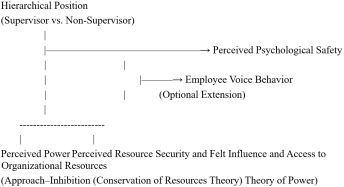
Figure 1 summarizes the study’s central argument: the supervisor–employee psychological safety gap is expected to reflect positional advantages associated with hierarchical role occupancy rather than varying differences in demographic composition. Psychological safety refers to individuals’ perceptions of the interpersonal risks associated with speaking up, admitting mistakes, and requesting support, and has been linked to employee voice and learning behaviors
| [13] | Edmondson, A.C. (1999). Psychological safety and learning behavior in work teams. Administrative Science Quarterly, 44(2), 350-383.
https://doi.org/10.2307/2666999 |
| [16] | Frazier, M. L., Fainshmidt, S., Klinger, R. L., Pezeshkan, A., & Vracheva, V. (2017). Psychological safety: A meta‐analytic review and extension. Personnel Psychology, 70(1), 113–165. http://dx.doi.org/10.1111/peps.12183 |
| [36] | Newman, A., Donohue, R., & Eva, N. (2017). Psychological safety: A systematic review of the literature. Human Resource Management Review, 27(3), 521–535.
https://doi.org/10.1016/j.hrmr.2017.01.001 |
[13, 16, 36]
. From an approach–inhibition perspective, formal power is theorized to be associated with greater approach-oriented tendencies and lower inhibition, rendering interpersonal risk-taking more manageable for employees who work in supervisory roles
| [3] | Anderson, C., & Berdahl, J. L. (2002). The experience of power: Examining the effects of power on approach and inhibition tendencies. Journal of Personality and Social Psychology, 83(6), 1362–1377.
https://doi.org/10.1037/0022-3514.83.6.1362 |
| [8] | Cho, M., & Keltner, D. (2020). Power, approach, and inhibition: Empirical advances of a theory. Current Opinion in Psychology, 33, 196–200.
https://doi.org/10.1016/j.copsyc.2019.08.013 |
| [24] | Keltner, D., Gruenfeld, D. H., & Anderson, C. (2003). Power, approach, and inhibition. Psychological Review, 110(2), 265–284. https://doi.org/10.1037/0033-295X.110.2.265 |
| [44] | Pike, B. E., & Galinsky, A. D. (2020). Power leads to action because it releases the psychological brakes on action. Current Opinion in Psychology, 33, 91–94.
https://doi.org/10.1016/j.copsyc.2019.07.027 |
[3, 8, 24, 44]
.
Additionally, the conservation of resources theory conceptualizes hierarchy as an unequal distribution of valued organizational resources (e.g., autonomy, information, social support, job security). Supervisory roles may therefore provide resource “caravans” that buffer potential employee losses associated with voice and workplace discourse, thereby contributing to higher perceived psychological safety
| [18] | Halbesleben, J. R. B., Neveu, J.-P., Paustian-Underdahl, S. C., & Westman, M. (2014). Getting to the "COR": Understanding the role of resources in conservation of resources theory. Journal of Management, 40(5), 1334–1364.
https://doi.org/10.1177/0149206314527130 |
| [20] | Hobfoll, S. E. (1989). Conservation of resources: A new attempt at conceptualizing stress. American Psychologist, 44(3), 513–524. https://doi.org/10.1037/0003-066X.44.3.513 |
| [21] | Hobfoll, S. E. (2001). The influence of culture, community, and the nested-self in the stress process: Advancing Conservation of Resources theory. Applied Psychology, 50(3), 337–421. https://doi.org/10.1111/1464-0597.00062 |
| [22] | Hobfoll, S. E., Halbesleben, J., Neveu, J.-P., & Westman, M. (2018). Conservation of resources in the organizational context: The reality of resources and their consequences. Annual Review of Organizational Psychology and Organizational Behavior, 5, 103–128. https://doi.org/10.1146/annurev-orgpsych-032117-104640 |
[18, 20-22]
. Together, these perspectives support the expectation that supervisory status is positively associated with psychological safety even after accounting for demographic and occupational characteristics, and that decomposition analyses will indicate minimal compositional explanation of the observed supervisor–employee PS gap.
Figure 1. Conceptual Model of the Supervisor–Employee Psychological Safety Gap.
2.3. Contributions of the Present Study
This case study advances understanding of psychological safety, hierarchy, and employee voice in several ways. It builds on foundational research defining psychological safety as essential for interpersonal risk-taking, learning, and performance
| [13] | Edmondson, A.C. (1999). Psychological safety and learning behavior in work teams. Administrative Science Quarterly, 44(2), 350-383.
https://doi.org/10.2307/2666999 |
[13]
by presenting direct evidence of a perception gap between supervisors and employees in a modern professional sample. Consistent with meta-analyses linking psychological safety to enhanced learning, engagement, and performance
| [16] | Frazier, M. L., Fainshmidt, S., Klinger, R. L., Pezeshkan, A., & Vracheva, V. (2017). Psychological safety: A meta‐analytic review and extension. Personnel Psychology, 70(1), 113–165. http://dx.doi.org/10.1111/peps.12183 |
| [36] | Newman, A., Donohue, R., & Eva, N. (2017). Psychological safety: A systematic review of the literature. Human Resource Management Review, 27(3), 521–535.
https://doi.org/10.1016/j.hrmr.2017.01.001 |
[16, 36]
, findings reveal that supervisory status strongly predicts psychological safety, even after controlling for demographic factors such as age, education, income, sex, race, or occupational field. This approach aligns with research on employee voice, which demonstrates that employees speaking up involves weighing costs and benefits shaped by perceived interpersonal and career risks. These risks are affected by hierarchical position and anticipated organizational responses
| [11] | Detert, J. R., & Burns, J. R. (2007). Leadership behavior and employee voice: Is the door really open? Journal of Leadership & Organizational Studies, 14(2), 126–141.
https://doi.org/10.5465/amj.2007.26279183 |
| [59] | Xu, M., Qin, X., Dust, S. B., & DiRenzo, M. S. (2019). Supervisor-subordinate proactive personality congruence and psychological safety: A signaling theory approach to employee voice behavior. The Leadership Quarterly, 30(4), 440–453. https://doi.org/10.1016/j.leaqua.2019.03.001 |
[11, 59]
.
Findings confirm that workplace psychological safety is shaped by organizational climate and leadership, which influences employee likelihood of raising concerns and participating in safety practices
| [1] | Amoadu, M., Ansah, E. W., & Sarfo, J. O. (2023). Influence of psychosocial safety climate on occupational health and safety: A scoping review. BMC Public Health, 23, Article 1344.
https://doi.org/10.1186/s12889-023-16246-x |
| [10] | Deng, X., Zhang, X., Chen, Y., & Liu, Y. (2024). Social support, psychological capital, multidimensional job burnout, and turnover intention among primary medical staff: A conservation of resources theory perspective. Human Resources for Health, 22, Article 915.
https://doi.org/10.1186/s12960-024-00915-y |
| [23] | Hu, Q., Dollard, M. F., & Taris, T. W. (2021). Organizational context matters: Psychosocial safety climate as a precursor to team and individual motivational functioning. Safety Science, 145, 105524. https://doi.org/10.1016/j.ssci.2021.105524 |
| [53] | Sun, Y., Yang, H., Wu, X., Jiang, Y., & Qian, C. (2022). How safety climate impacts safety voice—Investigating the mediating role of psychological safety from a social cognitive perspective. International Journal of Environmental Research and Public Health, 19(19), 11867.
https://doi.org/10.3390/ijerph191911867 |
[1, 10, 23, 53]
. This study contributes to this understanding by applying the Blinder–Oaxaca decomposition—originally used to examine labor-market disparities—to split the psychological safety gap between supervisors and employees into explained (composition-based) and unexplained (position-based) components. Regression analysis shows that supervisory roles predict safety independently of demographic factors, while decomposition tests whether the gap comes from roles or individual characteristics.
Demographics account for almost none of the gap, while the unexplained portion accounts for nearly all of it. This approach supports structural explanations involving hierarchical power and resource access, consistent with the Approach–Inhibition Theory of Power, which suggests that power encourages approach behaviors while low power leads to inhibition, affecting perceived safety
| [8] | Cho, M., & Keltner, D. (2020). Power, approach, and inhibition: Empirical advances of a theory. Current Opinion in Psychology, 33, 196–200.
https://doi.org/10.1016/j.copsyc.2019.08.013 |
| [24] | Keltner, D., Gruenfeld, D. H., & Anderson, C. (2003). Power, approach, and inhibition. Psychological Review, 110(2), 265–284. https://doi.org/10.1037/0033-295X.110.2.265 |
| [44] | Pike, B. E., & Galinsky, A. D. (2020). Power leads to action because it releases the psychological brakes on action. Current Opinion in Psychology, 33, 91–94.
https://doi.org/10.1016/j.copsyc.2019.07.027 |
[8, 24, 44]
. This also aligns with Conservation of Resources theory, which relates resource access and vulnerability to risk-taking
| [18] | Halbesleben, J. R. B., Neveu, J.-P., Paustian-Underdahl, S. C., & Westman, M. (2014). Getting to the "COR": Understanding the role of resources in conservation of resources theory. Journal of Management, 40(5), 1334–1364.
https://doi.org/10.1177/0149206314527130 |
| [20] | Hobfoll, S. E. (1989). Conservation of resources: A new attempt at conceptualizing stress. American Psychologist, 44(3), 513–524. https://doi.org/10.1037/0003-066X.44.3.513 |
| [21] | Hobfoll, S. E. (2001). The influence of culture, community, and the nested-self in the stress process: Advancing Conservation of Resources theory. Applied Psychology, 50(3), 337–421. https://doi.org/10.1111/1464-0597.00062 |
| [22] | Hobfoll, S. E., Halbesleben, J., Neveu, J.-P., & Westman, M. (2018). Conservation of resources in the organizational context: The reality of resources and their consequences. Annual Review of Organizational Psychology and Organizational Behavior, 5, 103–128. https://doi.org/10.1146/annurev-orgpsych-032117-104640 |
| [34] | Meier, L. L. (2024). Gain and loss cycles revisited: What to consider when testing key propositions of conservation of resources theory. Organizational Psychology Review. Advance online publication.
https://doi.org/10.1177/27550311241247833 |
[18, 20-22, 34]
.
These results shift focus from demographic factors to role- and system-level interventions—such as increasing transparency, protecting voice, and sharing influence—that reduce risks of speaking up across varying organizational hierarchies. We develop hypotheses centered on positional mechanisms and treat demographic predictors as controls, giving mixed evidence on demographic psychological safety correlates.
Building on the Approach–Inhibition Theory of Power and the Conservation of Resources In this paper, we propose the following hypotheses: We focus on hypotheses related to positional mechanisms and consider demographic characteristics mainly as covariates. Based on the approach–inhibition theory of power and the conservation of resources theory, we suggest:
H1. Supervisory status is positively associated with psychological safety; supervisors will report higher psychological safety than non-supervisors.
H2. The association between supervisory status and psychological safety remains positive and statistically robust after accounting for demographic and occupational characteristics (age, education, household income, sex, race, and occupational field).
H3. Household income is positively associated with psychological safety, net of supervisory status and other covariates.
H4. After accounting for supervisory status and household income, remaining demographic and occupational covariates (age, sex, race, education, and occupational field) will explain little unique variance in psychological safety.
H5. In a Blinder–Oaxaca decomposition of the supervisor–employee psychological safety gap, the portion attributable to observed compositional differences will be small, whereas the residual (unexplained) component will account for most of the gap.
2.3.1. Theoretical Framework: The Role of Power and Resources Approach–Inhibition Theory
The Approach–Inhibition Theory of Power holds that power shapes motivation and cognition by activating an approach system that promotes action, confidence, and reward sensitivity, while low power engages an inhibition system linked to vigilance and constrained organization behavior
. This model outlines why psychological safety might vary across hierarchical levels, even when supervisors and non-supervisors share demographic similarities.
Because supervisors have greater authority, discretion, and control over resources, their positions tend to promote approach behaviors—reducing interpersonal risks and increasing their willingness to act, speak, and influence others
| [3] | Anderson, C., & Berdahl, J. L. (2002). The experience of power: Examining the effects of power on approach and inhibition tendencies. Journal of Personality and Social Psychology, 83(6), 1362–1377.
https://doi.org/10.1037/0022-3514.83.6.1362 |
| [44] | Pike, B. E., & Galinsky, A. D. (2020). Power leads to action because it releases the psychological brakes on action. Current Opinion in Psychology, 33, 91–94.
https://doi.org/10.1016/j.copsyc.2019.07.027 |
[3, 44]
. In turn, non-supervisory employees are more likely to be inhibition-oriented because they possess less power and greater vulnerability to social or career consequences, making speaking up riskier and psychologically less safe. Findings from recent research support the principle that power increases positive effect, reward focus, and disinhibition, while low power heightens threat sensitivity and constraint, creating systematic safety perceptions differences across varying hierarchical levels
.
2.3.2. Conservation of Resources Theory
COR theory outlines why psychological safety varies across hierarchical roles. It posits that people seek to gain, protect, and develop valued resources and experience stress when these resources are threatened or lost
. In organizations, people with access to autonomy, influence, status, information, and support are more likely to manage risk and act proactively, while those with fewer resources tend to be more cautious and defensive to avoid or mitigate loss
| [2] | Ananda, M. A. S., Nurhayati, M., & Rahim, A. R. (2024). The effect of leader member exchange, organizational citizenship behavior, and job crafting on in role performance by employee engagement. International Journal of Applied Management and Business, 2(1). https://doi.org/10.54099/ijamb.v2i1.780 |
| [18] | Halbesleben, J. R. B., Neveu, J.-P., Paustian-Underdahl, S. C., & Westman, M. (2014). Getting to the "COR": Understanding the role of resources in conservation of resources theory. Journal of Management, 40(5), 1334–1364.
https://doi.org/10.1177/0149206314527130 |
| [22] | Hobfoll, S. E., Halbesleben, J., Neveu, J.-P., & Westman, M. (2018). Conservation of resources in the organizational context: The reality of resources and their consequences. Annual Review of Organizational Psychology and Organizational Behavior, 5, 103–128. https://doi.org/10.1146/annurev-orgpsych-032117-104640 |
| [49] | Schmid, P. (2024). Understanding the “COR” of psychological safety in teams: Toward a conservation of resources perspective on psychological safety. [Working paper / institutional repository]. University of St. Gallen.
https://www.alexandria.unisg.ch/entities/publication/32e58c56-f98c-4dce-9285e8fe03fb4fbd |
[2, 18, 22, 49]
. Psychological safety serves as both a resource and a social condition that helps employees conserve and build resources by reducing social uncertainty and encouraging organizational help-seeking, error reporting, and speaking up
| [13] | Edmondson, A.C. (1999). Psychological safety and learning behavior in work teams. Administrative Science Quarterly, 44(2), 350-383.
https://doi.org/10.2307/2666999 |
| [16] | Frazier, M. L., Fainshmidt, S., Klinger, R. L., Pezeshkan, A., & Vracheva, V. (2017). Psychological safety: A meta‐analytic review and extension. Personnel Psychology, 70(1), 113–165. http://dx.doi.org/10.1111/peps.12183 |
| [36] | Newman, A., Donohue, R., & Eva, N. (2017). Psychological safety: A systematic review of the literature. Human Resource Management Review, 27(3), 521–535.
https://doi.org/10.1016/j.hrmr.2017.01.001 |
[13, 16, 36]
.
When workplace safety is high, employees are willing to invest in voice and learning without fear of embarrassment, reputational damage, or strained relationships. However, perceptions of low safety lead employees to conserve resources through organizational silence, avoiding discourse, and threat exposure reduction
| [13] | Edmondson, A.C. (1999). Psychological safety and learning behavior in work teams. Administrative Science Quarterly, 44(2), 350-383.
https://doi.org/10.2307/2666999 |
| [58] | Willie, M. M. (2025). Leader-member exchange and organisational performance: A review of communication, biases, and personality challenges. Golden Ratio of Human Resource Management, 5(1). https://doi.org/10.52970/grhrm.v5i1.697 |
| [59] | Xu, M., Qin, X., Dust, S. B., & DiRenzo, M. S. (2019). Supervisor-subordinate proactive personality congruence and psychological safety: A signaling theory approach to employee voice behavior. The Leadership Quarterly, 30(4), 440–453. https://doi.org/10.1016/j.leaqua.2019.03.001 |
[13, 58, 59]
. This aligns with COR explanations of defensive behavior, in which insecurity triggers self-protective choices to conserve threatened resources
| [50] | Schwarz, G. M., Newman, A., Cooper, B., & Eva, N. (2021). Defensive decision making: Operationalization and the relevance of psychological safety and job insecurity. Journal of Occupational and Organizational Psychology, 94(3), 470–494. https://doi.org/10.1111/joop.12353 |
[50]
.
In high-stakes settings, these dynamics matter because raising concerns often carries the risk of retaliation or sanctions. Climates that protect psychological health and foster safety can enhance participation and reduce perceived risks of loss
| [1] | Amoadu, M., Ansah, E. W., & Sarfo, J. O. (2023). Influence of psychosocial safety climate on occupational health and safety: A scoping review. BMC Public Health, 23, Article 1344.
https://doi.org/10.1186/s12889-023-16246-x |
| [12] | Dong, R. K., Li, X., & Hernan, R. R. (2024). Psychological safety and psychosocial safety climate in workplace: A bibliometric analysis and systematic review towards a research agenda. Journal of Safety Research, 91, 1–19.
https://doi.org/10.1016/j.jsr.2024.08.001 |
| [23] | Hu, Q., Dollard, M. F., & Taris, T. W. (2021). Organizational context matters: Psychosocial safety climate as a precursor to team and individual motivational functioning. Safety Science, 145, 105524. https://doi.org/10.1016/j.ssci.2021.105524 |
| [53] | Sun, Y., Yang, H., Wu, X., Jiang, Y., & Qian, C. (2022). How safety climate impacts safety voice—Investigating the mediating role of psychological safety from a social cognitive perspective. International Journal of Environmental Research and Public Health, 19(19), 11867.
https://doi.org/10.3390/ijerph191911867 |
[1, 12, 23, 53]
.
2.4. Methods
2.4.1. Sample and Procedure
The analytical sample consisted of 183 working professionals recruited through Cloud Research, who completed data on all study variables. Participants completed an online survey assessing psychological safety perceptions, supervisory status, and demographic characteristics. Compensation was $3.50 for approximately 15 minutes of participation. The sample included 62 supervisors (33.9%) and 121 non-supervisors (66.1%). Participants were 56.8% female and 72.1% White, with a mean age of 38.1 years (SD = 9.6, range = 20-65). Education levels included: 10.4% high school diploma or less, 27.9% some college or associate degree, 42.6% bachelor's degree, and 19.1% graduate degree. Mean household income was $86,300 (SD = $57,100). Occupation fields included STEM/IT (22.4%), Business/Finance (16.9%), Healthcare (8.7%), Education (7.7%), Public Service (8.2%), and Other (36.1%).
2.4.2. Measures
Psychological safety. We defined “team” as the participant’s closest work group—the individuals they collaborate with most often, share goals or deliverables with, and rely on to complete key tasks. Participants were instructed to answer all “team” questions for this work unit, not the entire organization. This perspective aligns with viewing psychological safety as a shared, immediate aspect of the work environment. Psychological safety was assessed using a 10-item scale adapted from
| [13] | Edmondson, A.C. (1999). Psychological safety and learning behavior in work teams. Administrative Science Quarterly, 44(2), 350-383.
https://doi.org/10.2307/2666999 |
[13]
. Participants rated items on a 5-point scale from 1 (Strongly Disagree) to 5 (Strongly Agree). A sample item is "Members of this team are able to bring up problems and tough issues." One item was reverse-coded ("If you make a mistake on this team, it is often held against you"). The scale demonstrated excellent internal consistency (α =.927). Scores were computed as the mean across all items, with higher scores indicating greater perceived psychological safety.
2.5. Supervisory Status
Participants indicated whether they have supervisory responsibilities in their current role (Yes/No). Responses were coded as 1 = Supervisor, 0 = non-supervisor.
2.5.1. Demographic Variables
Age was measured in years (continuous). Education was coded on a 4-level ordinal scale: 1 = High school diploma or less; 2 = Some college or associate degree; 3 = Bachelor's degree; 4 = Graduate degree. Household income was measured in categorical ranges and converted to midpoint values in thousands of dollars (e.g., $50,000-$74,999 = $62.5k). Sex was coded as 1 = Female, 0 = Male. Race was coded as 1 = White, 0 = Non-White. The Occupation field was dummy coded into five categories (Education, Healthcare, Public
Service, STEM/IT, Business/Finance), with "Other" as the reference category.
2.5.2. Analytical Approach
All analyses were conducted in R Version 4.5.2
| [46] | R Core Team. (2025). R: A Language and Environment for Statistical Computing. R Foundation for Statistical Computing. https://www.R-project.org/ |
[46]
. To evaluate whether the supervisor–employee psychological safety gap reflects role-linked differences rather than compositional differences, we used two complementary approaches. First, we estimated hierarchical multiple regression models predicting psychological safety. Model 1 included demographic and occupational covariates (age, education, household income, sex, race, and occupational field indicators). Model 2 added supervisory status. Hypotheses 1–2 were evaluated by the sign and statistical significance of the supervisory-status coefficient and the incremental variance explained when supervisory status was introduced. Hypotheses 3–4 were evaluated using the estimated effects of household income and the remaining covariates in the full model.
Second, we applied the Blinder–Oaxaca decomposition
| [5] | Blinder, A.S. (1973). Wage discrimination: reduced form and structural estimates. Journal of Human Resources, 8(4), 436-455. https://doi.org/10.2307/144855 |
| [41] | Oaxaca, R. (1973). Male-female wage differentials in urban labor markets. International Economic Review, 14(3), 693-709. |
[5, 41]
. to partition raw supervisor–employee differences in psychological safety into (a) an explained component attributable to between-group differences in observed covariates (composition) and (b) an unexplained component attributable to differential returns to those characteristics and unobserved factors (i.e., a residual component often interpreted as consistent with role-linked or structural differences, but not causal). We implemented a twofold decomposition using the non-supervisor coefficient structure as the reference and assessed uncertainty via bootstrap confidence intervals (5,000 resamples).
3. Results
3.1. Preliminary Analyses: Do Supervisors Differ Demographically
Before examining predictors of psychological safety, we tested whether supervisors systematically differ from non-supervisors on demographic characteristics. Contrary to composition-based expectations, the two groups did not significantly differ on any demographic variable. Supervisors and non-supervisors showed similar ages (Ms = 37.6 vs. 38.3, t = -.45, p =.650, d = -.07), education levels (Ms = 2.85 vs. 2.63, t = 1.63, p =.105, d =.25), household incomes (Ms = $78.0k vs. $90.6k, t = -1.41, p =.160, d = -0.22), gender composition (53.2% vs. 58.7% female, χ² =.30, p = .584), and racial composition (64.5% vs. 76.0% White, χ² = 2.16, p = .141). Notably, non-supervisors reported slightly higher mean incomes than supervisors, although this difference was not statistically significant.
Supervisors reported significantly higher psychological safety than non-supervisors (Ms = 4.02 vs. 3.75, d =.34), consistent with the perception gap established in past research.
This gap of .28 points on the 5-point scale represents the total difference to be explained by subsequent analyses.
3.1.1. Hierarchical Regression Results
Table 1 presents the hierarchical regression results. Model 1, containing only demographic controls, was not statistically significant,
F(10, 172) = 1.40,
p =.183,
R² =.075.
Only household income emerged as a significant predictor in this model (B =.003, p =.008). Adding supervisory status in Model 2 significantly improved model fit, ΔR² =.032, Fchange(1, 171) = 6.12, p =.014. The full model was statistically significant, F(11, 171) = 1.87, p =.047, R² =.107. Supervisory status was a significant positive predictor (B =.33, β =.39, p <.05), indicating that supervisors scored .33 points higher on psychological safety after controlling for all demographic variables. Household income remained significant (B = .004, β = .24, p < .01), each with $10,000 increase in income associated with a .04-point increase in psychological safety. Education showed a marginally significant negative effect (B = -.14, β = -.15, p >.05), contrary to prediction. Age, sex, race, and occupation were not significant predictors.
Table 1. Hierarchical Regression Predicting Psychological Safety.
Variable | B | SE | β | t | p | 95% CI |
Constant | 3.90 | .31 | — | 12.47 | <.001 | [3.28, 4.51] |
Age | -.00 | .01 | -.00 | -.06 | .956 | [-.01,.01] |
Education | -.14 | .07 | -.15 | -1.97 | .051† | [-.28,.00] |
Income ($k) | .004 | .001 | .24 | 3.19 | .002** | [.001,.006] |
Female | -.19 | .12 | -.23 | -1.58 | .115 | [-.43,.05] |
White | .03 | .14 | .03 | .19 | .846 | [-.25,.30] |
Supervisor | .35 | .13 | .42 | 2.68 | .008** | [.09,.60] |
3.1.2. Blinder-Oaxaca Decomposition Results
To further distinguish whether the supervisor–employee psychological safety gap reflects differences in observed composition versus residual, role-linked differences, we applied a Blinder–Oaxaca decomposition (
Table 2).
Table 2 reports the Blinder–Oaxaca decomposition of the supervisor–employee gap in psychological safety. The raw difference between supervisors and non-supervisors was .279 points. The explained (compositional) component was approximately zero (−.001; −0.3% of the gap) and not statistically different from zero (95% CI [−.155, .153]). In turn, the unexplained component accounted for essentially the entire difference (.279; 100.3%) and was statistically significant (95% CI [.015, .559]). Observed demographic and occupational factors explained essentially none of the gap (explained component ≈ 0%; small negative values can occur due to sampling and model estimation), whereas the unexplained component accounted for virtually all the difference.
Note that small negative or above-100 percentage shares can occur in Oaxaca decompositions due to sampling variation and estimation/rounding, particularly when the explained component is near zero. Together, results indicate that observed demographic and occupational characteristics do not account for the supervisor–employee gap; instead, the disparity is concentrated within the residual component, consistent with unmeasured role-linked factors and/or differential returns to observed characteristics. As with all decomposition analyses, the unexplained component should be interpreted as a residual difference rather than definitive evidence of a causal role effect.
Further inspection of the explained component suggested offsetting contributions across covariates. Income contributed negatively (−13.7%) because supervisors reported slightly lower incomes than non-supervisors, which would be expected to decrease (not increase) psychological safety. Gender composition contributed positively (+7.3%) because the supervisor group included fewer women, and women reported lower psychological safety on average. These opposing contributions largely cancelled each other out, yielding a near-zero net explained component.
Table 2. Blinder-Oaxaca Decomposition of the Supervisor-Employee Perception Gap.
Component | Estimate | % of Gap | 95% CI |
Total gap | .279 | 100.0% | — |
Explained (Composition) | -.001 | -.3% | [-.16,.15] |
Unexplained (Role-linked / Unobserved factors) | .279 | 100.3% | [.02,.56]* |
3.2. Summary of Hypothesis Tests
Findings from research supported the positional account. Supervisory status was positively associated with psychological safety (supporting H1) and remained positive and statistically meaningful after adjusting for demographic and occupational covariates (supporting H2). Household income was positively associated with psychological safety net of supervisory status and controls (supporting H3). Consistent with H4, the remaining demographic and occupational covariates (age, sex, race, education, and occupational field) explained little unique variance in psychological safety once supervisory status and income were included. H5, however, was not supported: the explained component of the Blinder–Oaxaca decomposition was not statistically different from zero, indicating that observed compositional differences accounted for little to none of the supervisor–employee gap.





 Share This Article
 Twitter
 Linked In
 Facebook
 Copy
Copy Download